

When we talk about an organization, we generally refer to its organizational structure, the organizational chart that defines the hierarchy and chain of command, the policies and business processes that reflect how things are done on a day-to-day basis, and the organizational culture as a reflection of the values and behaviors that we reinforce. Combined, these three factors traditionally capture the structure or form of an organization.
Organizational restructuring of a company
And over the last few decades, most of the restructuring of organizations It has been done to resize, redesign and rebuild organizations based on these three factors. The curious thing is that in practice organizations are not known for their structures but for their capabilities, so when we admire Apple we do it for its ability to innovate and the elegance of its designs, when we talk about Amazon we refer to the quality of its services and customer service, and when we mention Google it is to talk about the benefits of its open and participatory culture.
Therefore, the key question, when we refer to the future of organizations, must necessarily be; What are the capabilities that organizations need to face a disruptive, uncertain and changing future like the current one? And leaders at all levels must focus on their organization’s capabilities rather than its structure, and demonstrate with results that they have the capabilities necessary to stay competitive in the face of uncertainty.
Dual Organizations: Exploitation and Exploration
Organizations in the future must be dual, that is, show the dual capacity to be dynamic and stable at the same time. Dynamic practices allow companies to respond nimbly and quickly to new challenges and opportunities, while stable practices allow us to maintain day-to-day operations and operational results. Agility is not incompatible with stability, quite the opposite. Agility requires stability for most businesses.
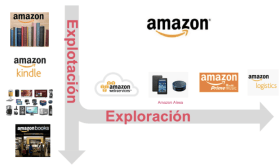
Amazon and Apple are a prime example of the new generation of
structurally dual organizations
. Its leaders have been able to exploit mature businesses such as retail and distribution, in which efficiency and incremental improvements are key, and at the same time leverage existing assets and capabilities to explore new domains where flexibility and experimentation are needed.
If you need advice to learn how to transform your current organization into a dual organization,
contact us
, we are a
consulting firm specialized in organizational design
.
Discover more from José Cabrera
Subscribe to get the latest posts sent to your email.


