
So far, our reflections on the Age of Collaboration have focused on Business Innovation, which we have defined as a true “business imperative”, that is, a sine qua non
for the survival of companies in a world of accelerated change. We lacked, however, to address the personal dimension of innovation
. And that is precisely what I intend to do in this and the next conversation.
My idea is to help you build a personal innovation map; a roadmap that you can use to deal with the uncertainty and volatility of this complex and changing environment in which we are living.
The need to invest in personal innovation
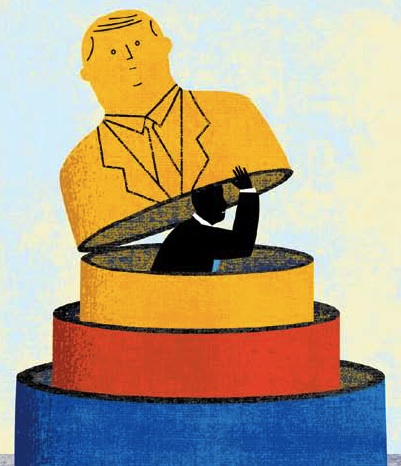
The starting point is the following: in a time like this, marked by accelerated changes, you cannot drive looking in the rearview mirror. In other words, you cannot rely on getting ahead using those tools that have worked for you before, because what awaits us is completely different from what we have known so far.
Whether you like it or not, the world is changing, and you need to change the old ways of working, which only made sense in the past and that arose to solve problems that are no longer relevant in achieving your goals.
Personal and business innovation go hand in hand
As you’ll discover as you progress through the conversation, there are interesting similarities between personal innovation and business innovation.
Business innovation transforms industries. And, in an analogous way, personal innovation transforms people, and allows them to improve their abilities to interact with the new reality.
They are, in a sense, two sides of the same coin. It is not enough for companies to innovate. People must also do so. After all, people who prove incapable of change will share the same fate as those companies anchored in the past: they will cease to be competitive and relevant in the new context.
This time short-term answers are not enough. There have been times when hiding your head, or enduring the downpour, has been enough to get by. Unfortunately, or fortunately, this is not the case. This time it will not be enough for you to “survive” the changes locked up in your old shelter.
Think that, this time, yes, It’s time for you to leave your “comfort zone”, to come out of the cave to analyze trends, clues about what is to come; to explore the future; to try to understand and internalize the new reality, and to be able to learn and develop the new skills you need to face the future.
What is personal innovation?
Personal innovation is still a relatively underdeveloped concept, and one that we very commonly associate with personal development, or even with “self-help” tools.
Many times, when we reflect on our personal goals and the changes needed to achieve them, we do so under pressure, blinded by immediacy, by the urgency of everyday life, by obligations, social pressures, fear and insecurity; that is, we focus our reflection on the risks and obstacles that stand in our way.
Other times, on the other hand, we approach the new realities from our small “daily bubble”, and that isolation, that lack of perspective, prevents us from understanding what is happening, and also how it will affect us and condition our future.
The reality is that the emotional pressure exerted on us by the fear of failure prevents us from innovating, and the inability to see reality with different eyes prevents us from seeing the full spectrum of viable solutions. As a result, we are unable to see the opportunities that change can bring to our lives.
Innovating is therefore not easy. But…
What if we dared to question the status quo of things, to innovate and create value in everything we do?
What if we could start this journey towards change and innovation by simply starting from curiosity and observation of what is happening around us?
What if we could explore new territories without fear, freed from the prejudices of the past, ready to create new realities, new opportunities for development?
What if, instead of hiding in our refuge, we could interact with the new reality, or in other words, we could participate in the new conversations, to share and create value in the new global networks, as so many people are already doing?
What if we could reinvent ourselves as people to rediscover – perhaps – a new version of ourselves, an improved version, that helps us to be relevant in the new context?
As you can see, the first ideas that come to mind for the challenge of personal innovation are, in fact, a lot of questions. And I don’t think we can attribute it to chance. We are in a time of change and uncertainty, and perhaps there are no longer closed and conclusive answers but, rather, adequate questions; questions that inspire us, that force us to consider our vision of the world, and help us to forge an attitude towards things.
Personal innovation is a matter of attitude
Little by little we are getting closer to the heart of the matter. For me, personal innovation does not consist exclusively of a specific development, a specific change or a certain improvement.
Personal innovation is a “special attitude” that is revealed in all our actions: a commitment to be better every day in everything we do; the ability to see ourselves not for what we are today, but for what we can become; a way to approach the future with our full potential; the curiosity and open-mindedness necessary to interact with the outside world, without fear of making mistakes, aware that we learn from our mistakes and that only by exploring the unknown can we find new perspectives and discover new realities that will help us achieve a profound change in ourselves and in our lives.
It is, therefore, a constant innovation to live a richer life; a life that will allow us to develop our full potential as people. Personal innovation
Understood in this way, it is a perpetual process of renewal and self-transformation. And this is precisely what I propose for 2012.
Managing uncertainty


To understand today’s reality – so complex and changing – the first thing you must do is divide it into three planes:
Predictable environment. Start by identifying your “predictable environment”, which is the best known, the closest to you. It is on this plane where we can still continue to apply, to a greater or lesser extent, the tools that have allowed us to anticipate events until now. Your current map of reality is, without a doubt, very valid for moving in this environment, just as you have done so far.
New trends. Then there is the “environment of new trends”. In it, known variables coexist – those with which we are used to working, and which we can predict – with other discontinuous variables, which are not strange to us, but which we cannot fully control either, as they vary according to the context, and can be associated to create something different.
Your current map will also help you to identify those new trends that you had already intuited and that have begun to question your reality; that is, that have questioned the reliability of the tools you used until now to address problems, or the very way in which you interact with others (for example, when you discover that information can no longer be treated as it used to, because it is so much and so changing that memorizing it is a ridiculous pretension; or that the youngest in your family and in your organization are very different from you, who manage at full speed with digital devices, who have fun differently, who look for different things at work and in their free time, etc.).
Rupture dimension. Finally, we can talk about the “rupture dimension”, possibly the most characteristic of the new era. This is a very open and unstable area, diffuse, difficult to interpret. We know that it can have a great final impact on our lives, but we are not able to measure what it is.
This dimension of rupture – which does not appear on your current map – is the area in which the Professor Taleb’s Black Swans; namely: unpredictable and high-impact phenomena that escape statistics, and, in general, all our prediction tools; events that you cannot anticipate, that suddenly burst into your life and are capable of determining your decisions and, most likely, your future.
This zone of rupture – unknown and unpredictable by definition – is the one that most resembles what awaits us, that is, the future, of which if we know anything is that it will be anything but a repetition of the past.
This implies that what we have learned so far will not help us to manage the future, and that, ultimately, what we do not know about the future is much more than what we do know.
It goes without saying that each of these dimensions requires different tools and approaches, or what amounts to the same thing, which can only be interpreted correctly if we have the right mental map for it.
Don’t know where to start building the new maps?
Don’t worry. This has been an initial, preparatory reflection. So that what has been said does not remain a mere declaration of intentions, in the next conversation I am going to propose a map with three very simple steps for you to make 2012 your year of personal innovation; a kind of practical and inspiring guide that will help you to explore reality, that will allow you to make the most of your experiences on the path of your continuous personal transformation; and that, in short, will help you reinvent yourself as a person. Don’t miss it!
Discover more from José Cabrera
Subscribe to get the latest posts sent to your email.


